Search This Blog

Tuesday, 31 March 2020

Something useful from the Royal College of Midwives (!)

UM is pleased to report finding something of interest and usefulness on the RCM website!

Since the unjustified smothering of the Normal Birth Campaign by the RCM about 4 or 5 years ago and the removal of the excellent NBC resources from the RCM website, there has been very little of interest on it.  

However this may be of interest to all those setting up (minus the present SARs-Covid-2 interruption) much longed for and safety-enhancing Continuity of Care schemes:

https://www.rcm.org.uk/media/3559/what-if-my-midwifery-continuity-team-is-organising-how-we-work-a4-4pp_6.pdf 

It's a little sparse on detail but the issue of proper rostering and staffing is fundamental to CoC and it is faintly encouraging to see the RCM has some grasp of this.


Friday, 18 October 2019

Caroline Flint

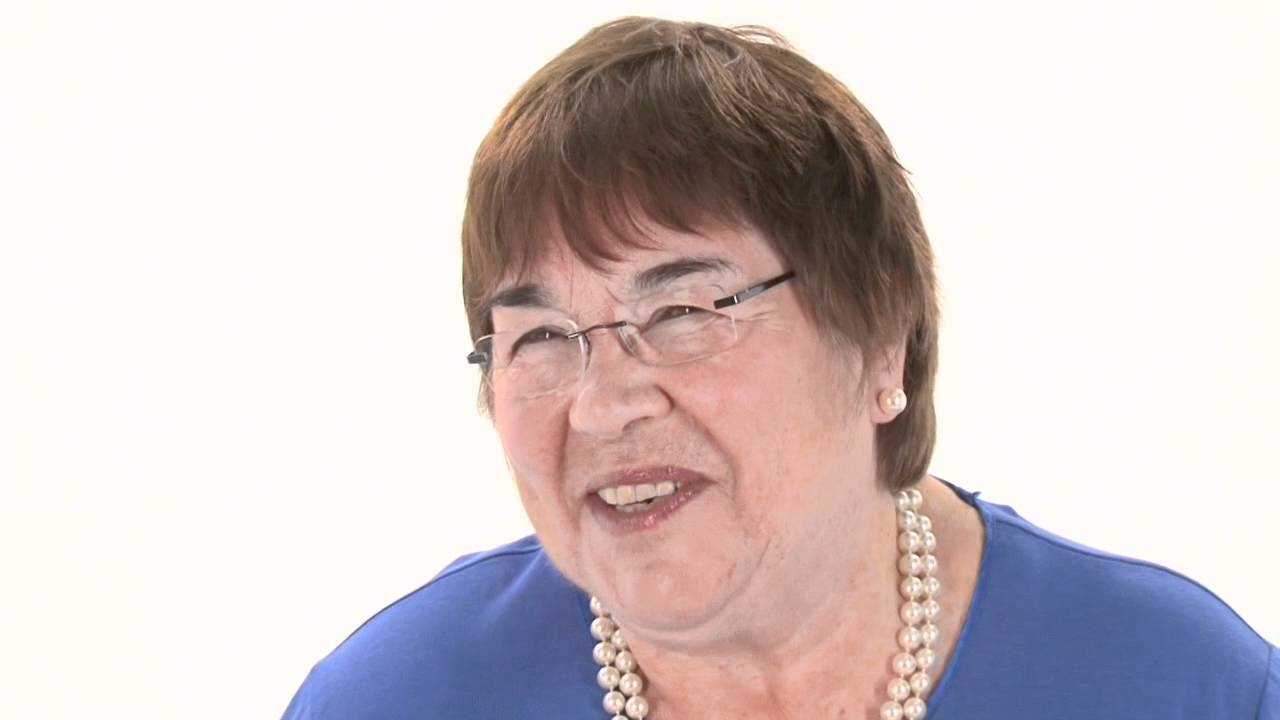
Caroline Flint is a former midwife of 37 years clinical experience, NCT teacher of 47 years experience, past President of The Royal College of Midwives and author.  She lives and has always worked in London, UK.  carolineflintmidwife.com   She was and is, along with Ina May Gaskin, UM's chief midwifery inspiration.

Caroline put continuity of carer firmly onto the midwifery agenda.  In the early 1980s she led the first randomised controlled trial of continuity of carer, The Know Your Midwife Scheme, which clearly showed the benefits of care by a small team.  She knows how continuity of carer works at a daily, practical level.

Now in her late 70s, Caroline's passion for continuity continues and she has made a short film to encourage those taking up the Better Births message that continuity is the lynchpin to safe and effective maternity care: https://www.dropbox.com/s/8pm7oltjinulou7/Caroline_V10.mp4?dl=0

"A prophet is not without honour; save in his own country" [St Matthew's Gospel] and Caroline has not always received the recognition she deserves from the UK midwifery establishment, generally made up of less maverick, splendid and visionary people than she.  But the fact remains that we would be in a poorer place as UK midwives had she not got up and voiced women's need to know their midwives.


Caroline Flint Midwife, Childbirth & New Baby Expert ...

Monday, 16 September 2019

Another Independent Midwife before the Nursing & Midwifery Council

Being investigated by the Nursing & Midwifery Council is an occupational hazard for independent midwives in the UK.  This state of affairs has gone on for many years and is an abuse of professional regulation (in UM's honestly-held opinion).   Please follow Kathryn Weymouth's case or attend if at all able to get to Stratford, East London.  The case is scheduled to last 5+ weeks from 23rd September (yes really).

https://www.facebook.com/pg/SupportForKathrynWeymouth/community/?ref=page_internal

Wednesday, 27 February 2019

Caesarean section is overused and underplayed

The recent unscientific attack in the UK on normal birth and the women and midwives who keep it in their sights as a desirable goal either presumes or posits that intervention in birth is safe, advantageous, scientific, and desirable to any right-thinking woman.  The pursuit of normal/physiological birth is conversely posited as a dangerous obsession, a primitive madness in a modern world or even a "cult". 

In fact, it is the over-use of Caesarean section and the all-too-ready recourse to it when labour stalls or takes longer that is becoming an increasing danger to women and babies.  No-one including UM disputes the value of surgical intervention when lives and well-being are at risk.  But most long, stalled, difficult labours are the result of women trying to give birth in uncomfortable clinical environments, in non-physiological positions, surrounded by strangers watching clocks and fetal heart monitors.  Neither the human pelvis nor the hypothalamus were designed to function outside a comfortable, free, loving, darkish and gentle environment.

The Lancet has recently (2018) published three excellent papers that really should reach a wide audience and be made known to women and their families (free to access and download).
https://www.thelancet.com/series/caesarean-section

The first paper deals with the global epidemiology of CS, the second (and read this one if you only have time for one) covers the short and long-term effects of CS in women and babies, and the third looks at interventions to reduce unnecessary CSs. 

Over 6 million excess (not medically indicated) CSs take place annually.  The fact that higher-educated women are more likely to have a CS shows how good information about CS is not reaching women of child-bearing age, and enabling them make choices that may protect them. 

The most promising "interventions"?  One-to-one support in labour, midwifery-led continuity of care and birth in non-medical settings such as birth centres.  The problem with this, of course, being that many policy-makers and doctors and self-appointed patient-safety gurus want to throw more technology at the problem rather than midwifery time.

Wednesday, 5 December 2018

Lovely freebirth story

There's a rather wonderful series on British TV this advent called Our Yorkshire Farm (four episodes I believe, one for each season) following the year in the life of a family who live in Upper Swaledale in Yorkshire.  In yesterday's 2nd episode (Spring), Amanda Owen tells her story of giving birth to her eighth child (the Owens have nine children) in front of the fire in the middle of the night with one of the dogs and a cup of tea for company.  She explains her how she came to her decision and evokes a sense of place, time, calm and peace.  A lovely, lovely narration and well worth a viewing (UM is fast becoming a Yorkshire Shepherdess addict):

https://netpro.website/series/356069/1/2

Amanda has her own website: https://www.yorkshireshepherdess.com/


Monday, 3 December 2018

Birth centre and home are safe for low-risk women: new systematic review.


Maternal and perinatal outcomes by planned place of birth among women with low-risk pregnancies in high-income countries: A systematic review and meta-analysis

https://www.sciencedirect.com/science/article/pii/S0266613818300974

This is a paper by Vanessa Scarfe and colleagues [Australia] looking at the combined outcomes of 28 studies involving more than half a million women across a number of countries.  It demonstrates that the evidence for the safety of home or birth centre for birth for low risk women is broad, substantial and clear.  Not that this hasn't been known and shown before, but it is good to remind the world of this at regular intervals, given the continued commitment of the anti-homebirth, anti-normal birth, anti-midwife lobby to their Project Fear agenda (for example but by no means the only example, Amy Tuteur's regular pseudo-skeptical pronouncements e.g.http://www.skepticalob.com/2014/04/just-how-dangerous-is-childbirth.html
and https://www.youtube.com/channel/UCnYRie_neROaEuTQslggVvg )


Sunday, 11 November 2018

Why mobility in labour matters...really, really matters!

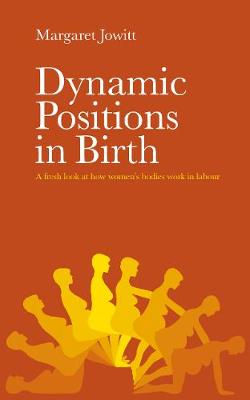
Below is a link to a blog written by birth physiology expert Margaret Jowitt.  Margaret Jowitt is also the designer of the Osborne Kneeling Chair (see earlier posts in this blog), based on her unique understanding of the anatomy and physiology of birth.  Margaret has also written a book "Dynamic Positions in Birth" which expounds her theories and is probably one of the most important books on birth physiology to have been written for at least a century.

Her insights should change the way women are cared for and the whole design of institutional labour environments across the world.  Her work also has implications for the all-too commonplace intervention of Induction of Labour and the crude manner in which this is currently carried out.  Understanding the onset of labour may lead to much better ways of inducing labour rather than the dreadful beating of the uterus with syntocinon that currently occurs (in the small minority of cases where starting labour may be helpful to mother and/or baby).

This work needs to find its way into textbooks and the teaching of midwifery and medical students.  It is really a back-to-basics where the foundation of physical care is based on an understanding of anatomy and physiology. 

https://softbirth.com/new-model-uterine-function/

https://softbirth.com/hi-lo-birth-support-birthing-chair/ 

https://www.waterstones.com/book/dynamic-positions-in-birth/margaret-jowitt/9781780661155 

Dynamic Positions in Birth: A Fresh Look at How Women's Bodies Work in Labour (Paperback)

Monday, 1 October 2018

New blog on birth and politics

A group of experienced birth activists, writers and campaigners have got together to write a campaigning blog focusing on threats to choice, continuity and control for women in the UK, Ireland and beyond.  This group has an impressive line-up, already has a couple of well-written posts on key issues, and you can subscribe quickly and easily. Link is also on the Useful Links facility to the right ->.

https://www.birthpracticeandpolitics.org/